
Concrete, Brick and Gumbo Clay: Why Heavy Debris Needs a 10 Yard
Concrete, brick and the wet gumbo clay are governed by physics, not preference. They're dense enough that a small container reaches legal weight while it still looks nearly empty.
In this guide
- The two-tons-per-yard problem
- Why not just a bigger box
- Gumbo clay and wet ground
- Keeping concrete clean
- Pricing a heavy job
Of all the material we haul in Lake Charles, the heavy stuff is the most misunderstood. People assume a big job needs a big box, and for concrete, brick and clay the opposite is true. Here's why heavy debris always goes in a small, dedicated 10 yard - and how to get a heavy job priced right.
The two-tons-per-yard problem
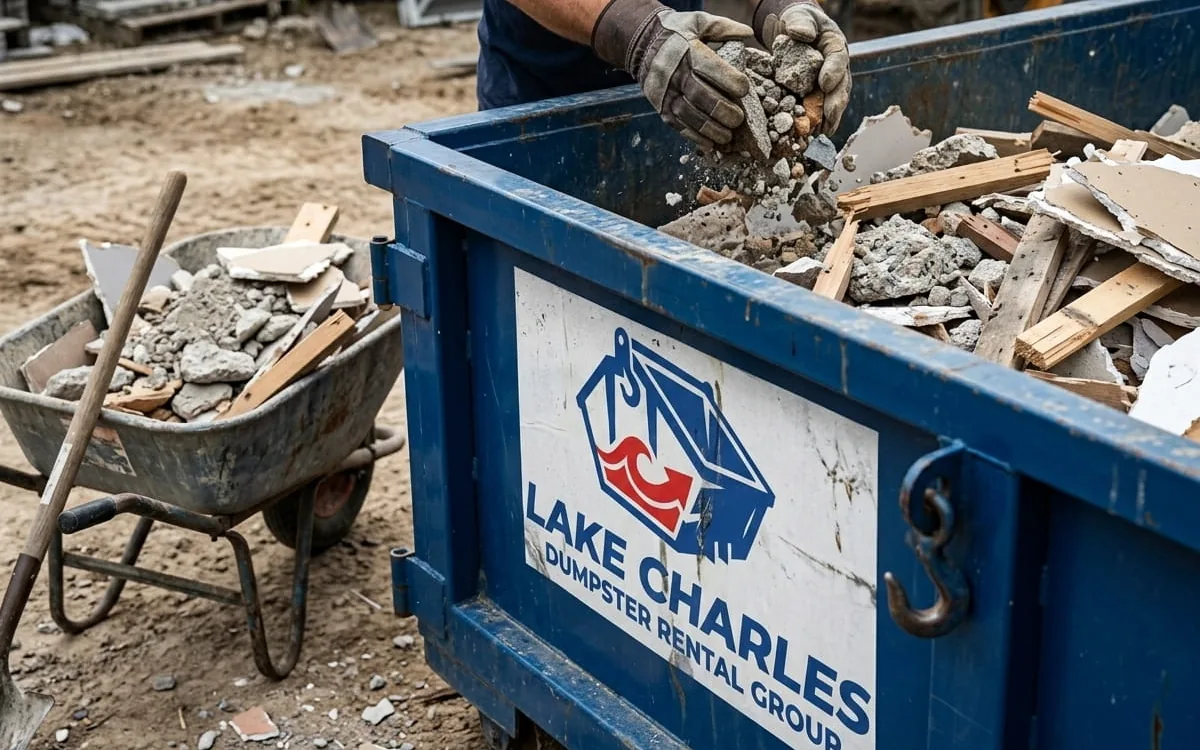
Concrete runs to roughly two tons per cubic yard. That number is the whole reason heavy debris behaves the way it does: a 10 yard container filled level with concrete is already at the legal road weight for the truck that carries it. The box looks modest and is doing the heaviest work on the site.
Why not just a bigger box
Customers regularly ask for a 20 or 30 yard for a driveway or foundation tear-out, and we decline for a simple reason: a large container filled with masonry could not be legally moved. It would sit on the property until someone removed material by hand. For bigger demolition we run multiple 10 yards or stage them across the job - more deliveries, but the only lawful way.
Gumbo clay and wet ground
The other heavy material here is the ground itself. Southwest Louisiana's dense gumbo clay - saturated by a high water table and heavy rain - is far heavier per yard than the debris beside it, and wet clay is heavier still. Spoil from a footing, slab or drainage job belongs in its own dedicated container, never mixed into general debris, where it will max out the truck while the box looks half full. Let it dry where the schedule allows and keep the container covered, since rain adds weight fast here.
Keeping concrete clean
Clean concrete, block and masonry - no timber, no tangled rebar, no rubbish - can be crushed and reused as base material rather than landfilled, which keeps it out of the disposal stream and keeps your cost down. Keep the heavy inert material clean and separate from the first load and it routes the efficient way.
Pricing a heavy job
Because heavy debris weighs far more than its volume suggests, the tonnage in even a modest slab or foundation usually surprises the owner. If you're demolishing a driveway, walkway or foundation, tell us the square footage and rough thickness and we'll work out the number of 10 yards rather than guess. Every load leaves tarped as Louisiana law requires.
Book a container in Lake Charles
One flat rate covering delivery, seven days, pickup and disposal.
(337) 545-2281Questions readers ask about this
Why does heavy debris go in a small dumpster?
Because dense material like concrete reaches the truck's legal road weight while a small box still looks half empty. A 10 yard filled level with concrete is already at that limit - a bigger container couldn't be legally hauled.
Can old concrete be recycled in Lake Charles?
Clean concrete, block and masonry can be crushed and reused as base material rather than landfilled, which keeps your cost down. Keep it clean and separate, and tell us so we set up a dedicated box.
Does gumbo clay need its own container?
For any real quantity, yes. The wet clay is heavy, so mixed into general debris it hits the weight limit fast. Keep spoil in its own 10 yard, and let it dry first if you can - rain adds weight fast here.
How many containers will my concrete job need?
It depends on the square footage and thickness. Tell us those and we'll work out the number of 10 yards - for a typical driveway or walkway tear-out it's often more than one, filled to level loads.